


The First Decking Day: A Defining Moment for the UK Decking Industry
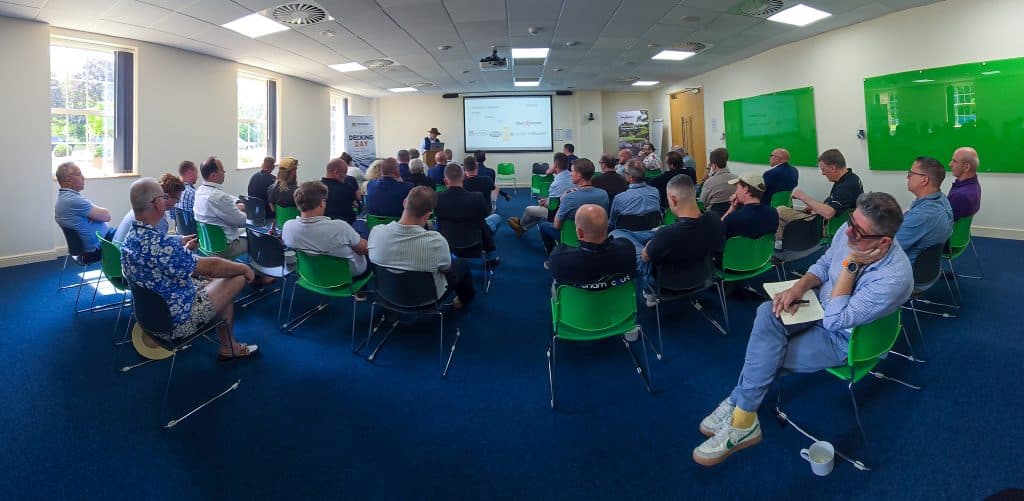
The first Decking Day was created to do far more than fill a room with products, banners and familiar industry faces. It was created to start a conversation that the UK decking industry has needed for many years. From the moment people arrived at Horticulture House, it was clear that this was not going to be another supplier presentation or a polite networking event. It had a stronger purpose, and that purpose carried through the whole day.
The event brought together manufacturers, suppliers, designers, landscapers, DeckPro’s, installers and industry voices from across the professional decking sector. Some attended to present, some attended to listen, and many came ready to challenge what they felt needed challenging. What connected the room was a shared belief that decking deserves better materials, better design, better construction and better public understanding.
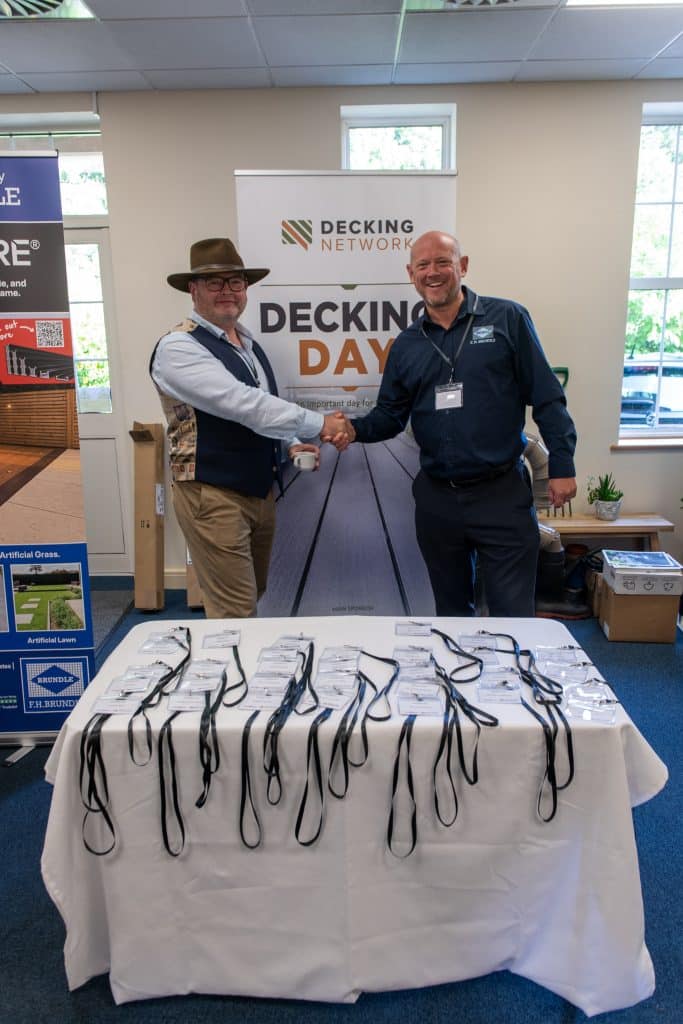
This was an invited audience of 44 confirmed attendees, and every lanyard was given out. That detail mattered because it reflected the level of commitment in the room. People did not simply register interest and disappear. They turned up, stayed engaged and contributed to a day that became far more significant than many had expected.
A day created from conviction
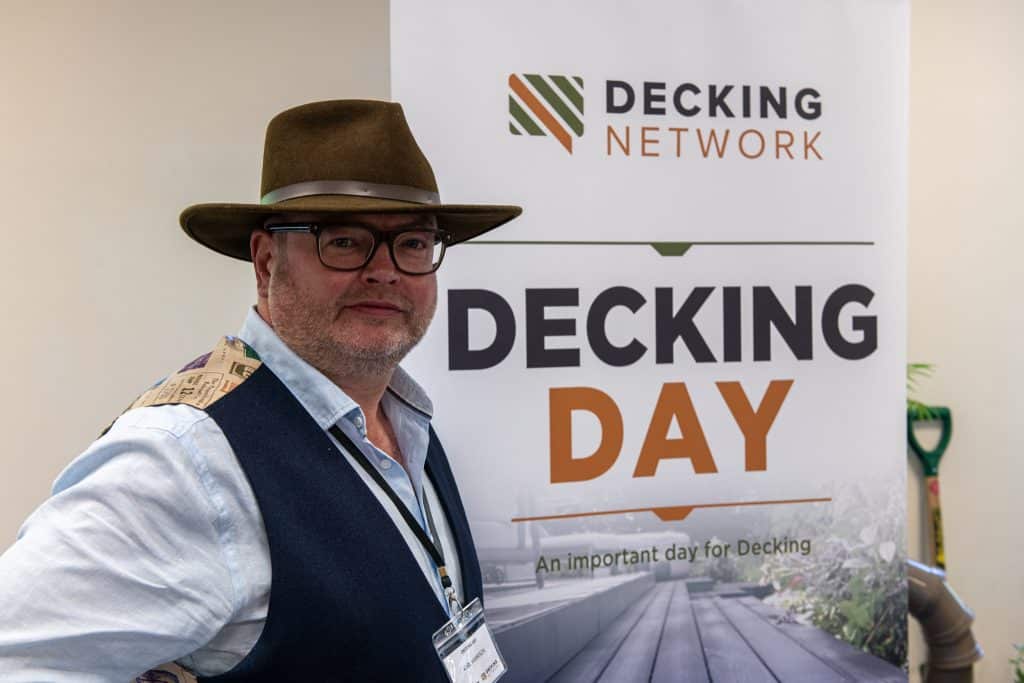
Decking Day was curated, instigated and driven by Karl Harrison, founder of The Decking Network. Since creating the Network in 2010, Karl has become one of the most persistent and vocal advocates for better decking in the UK. He has challenged poor practice, questioned weak specification and argued for many years that decking should be treated as a serious external structure.
That message has always sat at the heart of The Decking Network. A deck is not just a board, and it is not just a surface at the end of a garden. A deck is a structure, a specification, a safety consideration and a long-term responsibility. When viewed properly, it involves design, engineering, product knowledge, workmanship and maintenance.
That belief shaped the first Decking Day. It was not created to flatter the industry or celebrate everything it already does. It was created to bring the right people together, ask difficult questions and begin raising expectations across the sector. That is why the day felt important, and that is why the conversation must continue.

The right people in the room
The strength of Decking Day came from the quality of the people who attended. Timberbase, Deckorators, FH Brundle and Landscapeplus with In-Lite attended as exhibitors. Kebony, Grad Systems, Trex, Millboard, Owatrol, Composite Prime, Steady Consulting and Eva-Last also joined the day and helped broaden the conversation.
The wider room included Stone and Flora Garden Design, Urban Alfresco, Designer Exteriors, Cobham Court Landscapes and The London Decking Company. Mark Gregory, one of the most respected voices in the landscaping industry, also attended and contributed to the debate. Pro Landscaper magazine followed and reported on the day, with Rachel Forsyth present on behalf of the leading publication for the Landscaping Industry.
There were many more people involved, and it would be unfair to reduce the day to a list of names. The real value came from the mix of experience in the room. Product knowledge met site experience. Design thinking met construction reality. Commercial ambition met technical concern. That combination gave the day its energy.
Most importantly, people attended because they care. They care about insisting on the best materials, designed and installed to the best standards available. They also care about homeowners, because the end user often has no easy way to judge what is good, what is poor and what may fail.
Deckorators as main sponsor
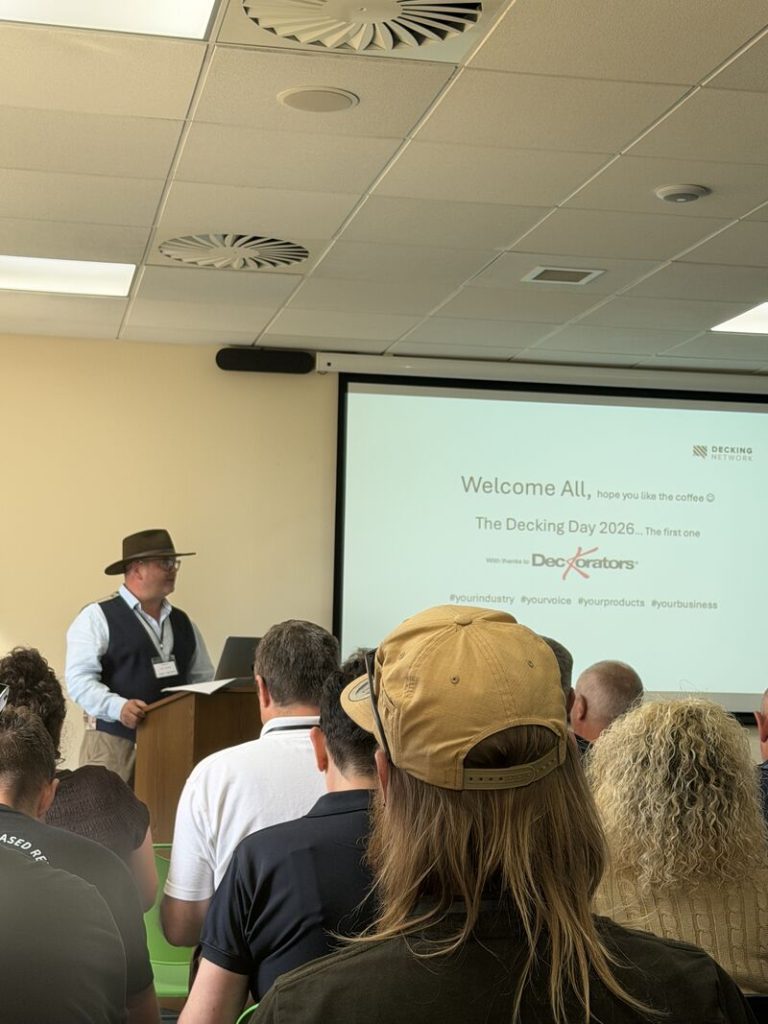
Deckorators supported the first Decking Day as main sponsor and brought a strong technical message into the room. The brand forms part of UFP Industries, a major US business with a significant outdoor living portfolio. UFP Industries also announced in 2026 that it had acquired MoistureShield decking operating assets, further strengthening its position in composite decking.
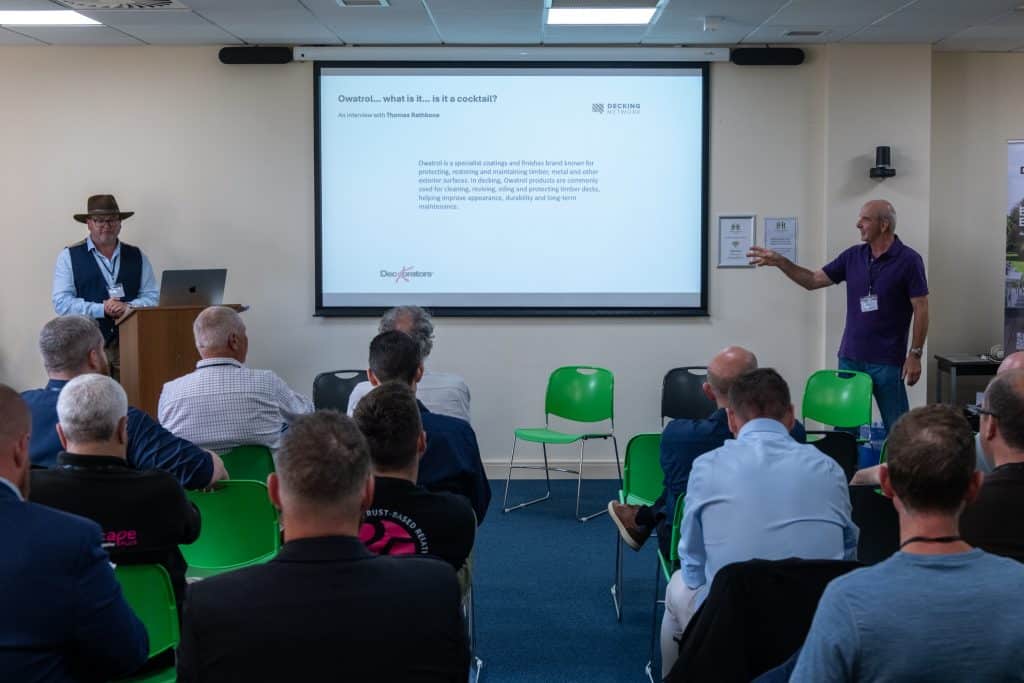
For the UK market, Deckorators Excursion carried a clear performance message. Peter O’Loughlin presented the product and joined Karl Harrison in conversation about its technical qualities. The focus was on low thermal movement, colour stability, durability, commercial suitability and exceptional slip resistance.
One moment in the presentation captured the mood of the day. Karl suggested to the audience that the product achieved something around 75 PTV, which already indicates very low slip potential. Peter corrected him at once and explained that it was well over 100. That answer landed because it was direct, specific and confident.
The room did not want vague claims. It wanted evidence, technical clarity and proper product confidence. Deckorators arrived with that message, which made its role as main sponsor feel entirely appropriate.
The Decking Network has found its place
One of the strongest outcomes from the day was the position now held by The Decking Network. It has been placed firmly in front of industry leaders, and it has shown that it belongs there. The Network is no longer simply a place for decking news, technical articles and opinion. It has become a central meeting point for serious conversations about the future of decking.
That position matters because the UK decking industry needs a stronger centre of gravity. Manufacturers need to hear from installers. Installers need better technical support from manufacturers. Designers need to understand structure, while suppliers need to understand what actually happens on site. Homeowners need clearer information before they choose a product, compare quotations or appoint a contractor.
The Decking Network now sits in the middle of those conversations, and that is exactly where it should be. Its role is not to promote one brand, one material or one narrow opinion. Its role is to pull the serious people together, challenge weak thinking and help raise the standard of decking across the UK.
Materials: the ugly, the bad and the good
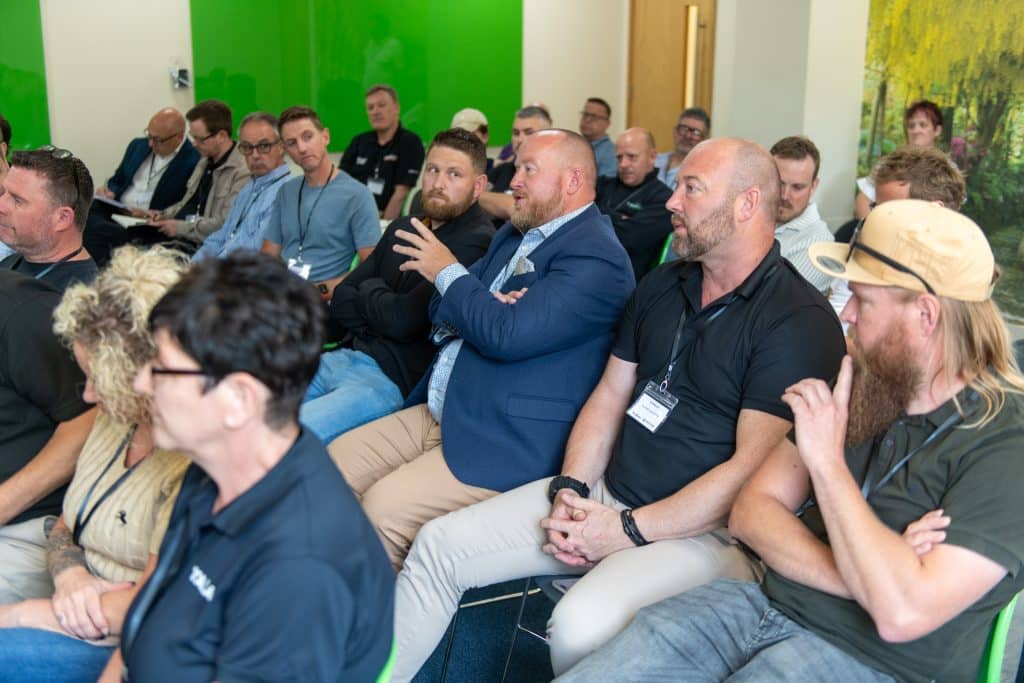
The day moved quickly into one of its most animated sections, titled “Materials: The Ugly, The Bad and The Good”. The discussion immediately set the tone because everyone had a point to make. The session ran beyond its planned time, but the extra debate felt necessary rather than indulgent.
The conversation became heated at times, although it remained constructive because people were willing to listen. The central issue was clear. Not all composite decking belongs in the same conversation, and the industry needs to recognise that fact more openly. A high-performance composite board should not be judged alongside poor-quality, mass-produced imports that damage confidence in the category.
The outcome was the need for a clear Tier One level of composite decking. That level should include products with credible testing, proven durability, strong stability, slip resistance and proper technical support. It should also separate serious manufacturers from products that may look acceptable at first glance but fail to perform over time.
This does not mean composite decking is the problem. In fact, the best composite decking can be an exceptional material when specified and installed correctly. The problem is that homeowners often cannot tell the difference between good, average and poor products. That creates confusion before purchase and disappointment after installation.
Help us educate the public today and for tomorrow
Education therefore became one of the strongest themes of the day. The public needs to understand what is good, what is bad, what is right and what is wrong. That education must cover product quality, subframe design, movement, slip resistance, warranties, fixings and installation standards. Without that clarity, poor products will continue to damage the reputation of serious manufacturers and skilled installers.
Design needs construction behind it
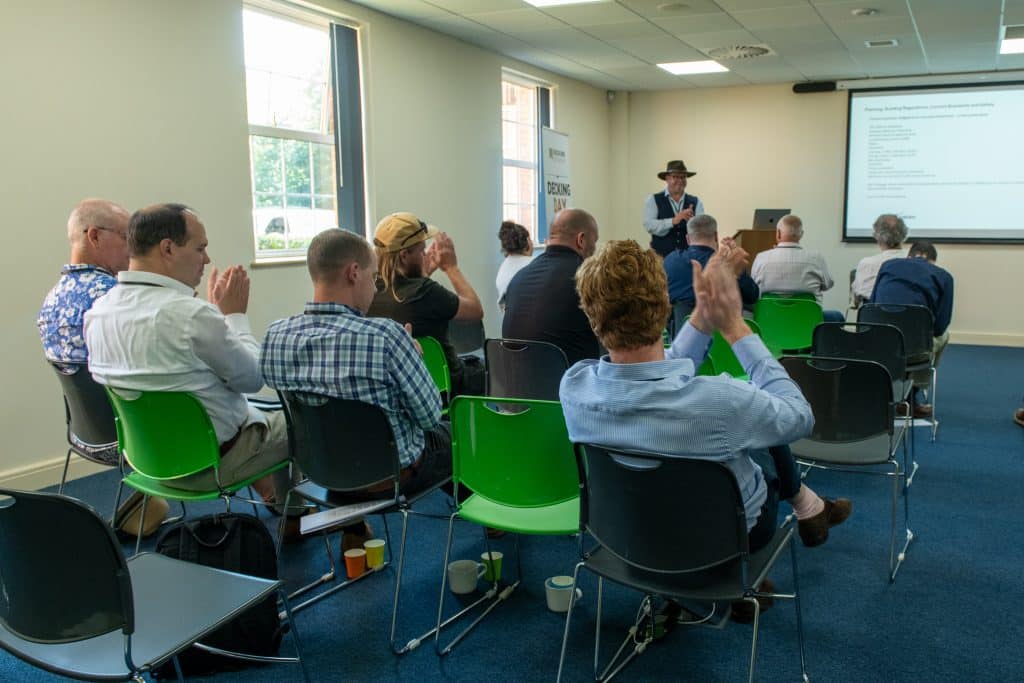
The “What’s Hot and What’s Not” section produced a clear and useful conclusion. Design matters enormously because every client wants an outdoor space that looks considered, refined and connected to the garden. However, good design cannot sit above proper construction. The build must support the design, or the whole project becomes vulnerable.
A deck may look beautiful on the day it is completed, but that does not mean it has been built well. If the structure is wrong, the fixings are unsuitable, the ventilation is poor or the movement has been ignored, the appearance becomes irrelevant. A deck needs to perform long after the first photographs have been taken.
That message returned throughout the day. The board is not the deck. The deck is the complete system, from the ground conditions and support structure through to the surface, edge detail, steps, balustrade and long-term performance. Better decking will only come when design and construction are treated as one conversation.
The hottest place to be right now is with 10,000 followers which is here, or if you would like to promote your business you should join us here on the Decking Network
Structure, planning and regulation for UK decking
The structure, planning and regulation session exposed one of the most important issues facing the sector. Many professionals had used 150 mm x 6.3 mm flathead fixings while assuming the warranty confirmed suitability. During the discussion, it became clear that some fixings being used on decking platforms were only Class 2.
That raised immediate concern because external decking structures require fixings suited to their exposure and application. A warranty does not automatically mean that a fixing has been specified correctly for a structural deck. It also became apparent that the relevant warranty evidence was not easily available in the room.
This was not a simple discussion about one fixing. It was a warning about a wider culture where products can be trusted without enough technical understanding behind them. Decking platforms are structures, and they should be treated as structures. They require proper design, suitable materials, correct fixings and a clear understanding of exposure.
The conversation also highlighted the need for better technical guidance across the industry. Installers, designers and suppliers need practical support on EC5, fixing selection and structural application. Product sales and construction responsibility cannot remain disconnected. If the industry wants safer decking, it needs stronger technical bridges between those areas.

The white elephant in the room
The white elephant in the room was standards. In the UK, decking standards can feel weak, underused, underappreciated and often ignored. Too many homeowners do not know what to demand, while too many professionals are left without a clear and consistent framework.
That problem affects everyone serious about decking. Good manufacturers suffer when poor products enter the same conversation. Professional installers suffer when poor workmanship becomes the public image of the trade. Good designers suffer when decking becomes associated with failure, movement, slipperiness or short service life.
The homeowner sits at the centre of this issue. Most homeowners do not know how to assess a deck quotation properly. They may compare surface boards and headline prices, while missing the importance of subframes, spans, fixings, ventilation and compliance with manufacturer guidance. That lack of knowledge creates space for poor specification.
Decking Day showed that the industry understands the problem. It also showed that many people are ready to help solve it. The challenge now is to convert discussion into better guidance, clearer information and stronger expectations.
The decking argument with Mark Gregory
The decking argument was expected to sit mainly between Karl Harrison and Mark Gregory, but it quickly moved into a wider discussion. The real focus became the way decking is viewed by the garden design world, and whether some design voices judge it through an unfair lens.
The concern was that decking can be dismissed when it is not fully recyclable at end of life. At first glance, that may sound like a reasonable position. However, it becomes more difficult when the same test is applied to other common landscaping materials.
Porcelain, sandstone, concrete, steel, treated timber and composite decking all deserve balanced comparison. No material should be criticised on one isolated point while others avoid the same scrutiny. A fair assessment should consider manufacture, transport, installation, durability, maintenance, service life and replacement cycles.
Some Tier One composite decking products contain very high mineral content and offer warranties of up to 50 years. Those facts should matter in any balanced discussion. Likewise, imported Indian sandstone may carry a much higher carbon footprint than some composite decking products. That also deserves consideration when designers discuss sustainability.
The point was not that decking should escape criticism. It was that decking should be judged fairly. If a material is going to be questioned, then all competing materials should face the same level of analysis. That was one of the most important challenges raised during the day.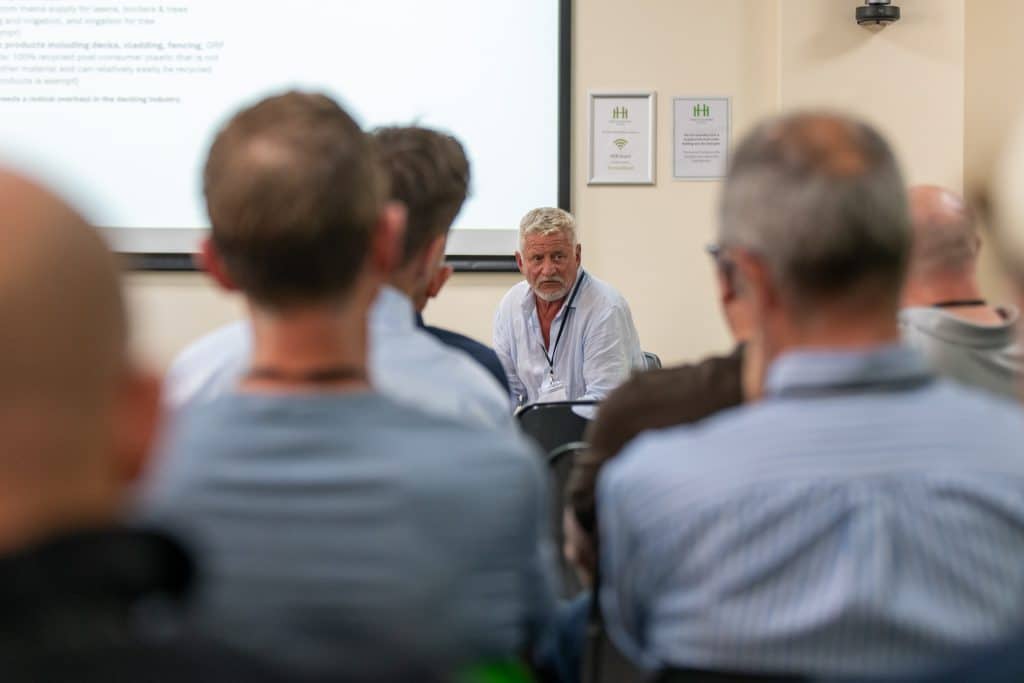
Decking in the built environment and public realm
The public realm discussion created another important debate. The room considered why large commercial and public spaces still specify substantial volumes of tropical hardwood when strong alternatives already exist. One example raised during the day concerned recent work in Canary Wharf, where Cumaru hardwood had reportedly been used in volume.
Even where hardwood carries FSC or PEFC certification, wider questions remain about species, sourcing and responsibility. Cumaru appears on CITES Appendix II, which means international trade is monitored because pressure on the species matters. That does not mean every use is unlawful, but it does mean greater scrutiny is justified.
The question for public realm specification is therefore straightforward. Why do some projects still default to tropical hardwood when modified timber and high-performance composite decking may offer strong alternatives? Materials such as Kebony deserve serious consideration, especially where sustainability, durability and consistency matter.
Public realm projects carry influence because they shape what designers, contractors and clients regard as acceptable. Those spaces should show the best available thinking, rather than repeat familiar habits. The material choices should consider sourcing, slip resistance, maintenance, structural suitability, durability and long-term value.
Decking has a legitimate place in the built environment, but it needs better specification and stronger technical confidence. When used well, it can provide safe, attractive and durable external surfaces. When used poorly, it reinforces the very concerns that serious professionals are trying to address.

A thirsty industry with a stronger voice
One of the clearest lessons from Decking Day was that the industry is thirsty for this conversation. It is thirsty for standards, product clarity, technical knowledge, honest debate and stronger leadership. The room did not want another comfortable event where difficult subjects were avoided.
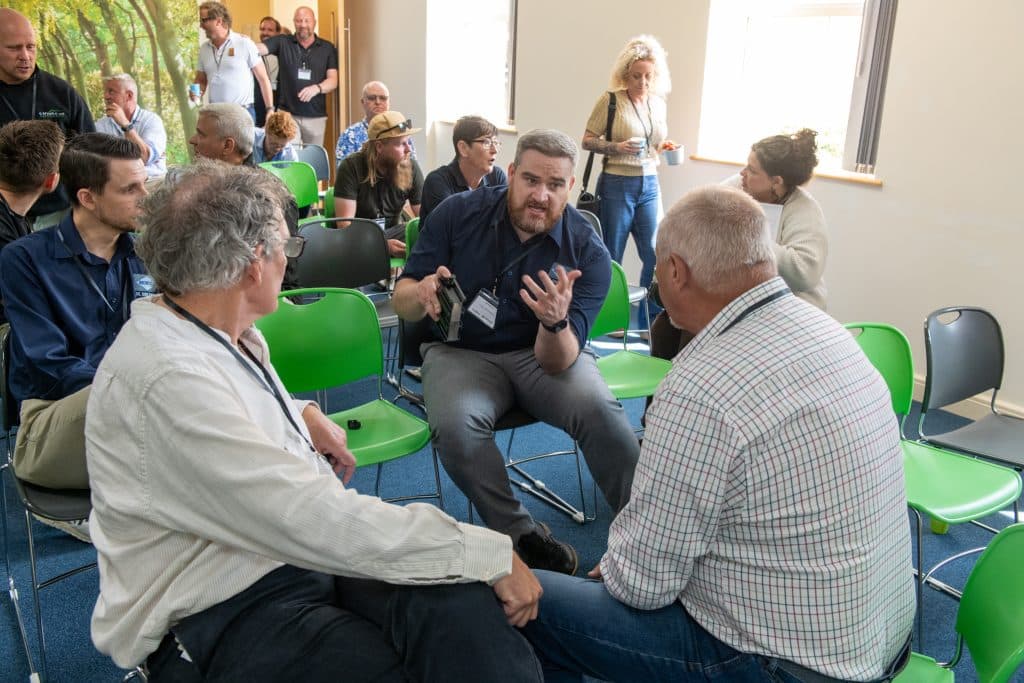
People wanted to talk about poor products because those products damage trust in the whole category. They wanted to talk about weak regulation because safe structures should not depend on guesswork. The crowd wanted to talk about design because decking still needs to earn fair consideration in better gardens and public spaces. They also wanted to talk together. That may sound simple, but it is one of the most important points from the day. Manufacturers, suppliers, designers and installers often work in connected areas, yet they rarely sit together long enough to understand each other properly. Decking Day changed that, at least for one important day.
The Decking Network is now in a position to pull these conversations together. It can connect serious businesses, informed designers, skilled installers and influential voices. It can also challenge weak thinking where the industry needs challenge. That role will become increasingly important as decking continues to grow.
What the industry said afterwards
The response after Decking Day confirmed the feeling in the room. Peter O’Loughlin, representing Timberbase for Deckorators Excursion decking in the UK, described the event as a great day and said it felt like the start of something the industry really needs. He also recognised the value of people who care about their industry and use their platform to improve it.
Lee Heitzman, UK Market Manager for Trex, also thanked Karl Harrison for hosting the inaugural Decking Day on behalf of The Decking Network. He welcomed the support from manufacturers, distributors and installers, who came together with a shared passion for improving the industry.
Lee also identified one of the central issues of the day. The industry lacks clear regulation around composite decking performance and safe substructure construction. His response pointed toward the responsibility that serious businesses now share. If the industry wants to build confidence, protect consumers and defend the reputation of the category, it needs to collaborate.
Every voice matters in this industry
Stu from Stone and Flora Garden Design also praised the day and recognised the passion in the room. Having been involved in similar events in the paving sector, he understood the value of bringing specialist voices together. Charles Taylor, Director of Composite Prime, said the day was well put together and that everyone took value from it. Barry John Davis put it more simply, but just as meaningfully, when he told Karl that he had done well.
Those responses mattered because they came from different parts of the industry. Together, they confirmed that Decking Day had created something timely, useful and necessary.
What happens next
There is now a great deal to collate from the 13 sections covered during the day. The event was advertised as action-packed and fast-paced, and it delivered exactly that. Some sections ran over because the conversations had depth, energy and obvious relevance to the people in the room.
Nobody left with anything negative. In fact, many people left with more than they expected. The knowledge shared by the great and the good of the industry exceeded the original ambition of the day. It also proved that better decking will not come from one company, one product or one opinion.
Better decking will come from shared standards, better education, stronger specification and honest debate. It will come from serious manufacturers, informed suppliers, skilled installers and designers who understand the full responsibility of the material. It will also come from homeowners becoming more informed and more demanding.
The next meeting of like-minded professionals is already being considered, and early interest suggests that the numbers could easily double. That growth would be welcome, but it also increases the responsibility on everyone involved. The first Decking Day gave the industry a voice, but the next one must make that voice even stronger.
Thank you to everyone who attended, contributed, challenged, listened and supported the first Decking Day. Your attendance mattered, and your voice mattered even more. Collectively, that voice is already getting louder. Next time it may be deafening.
Why not join us NOW
If you are considering sharing your voice, your products or anything associated with The Decking Network and of course the next Decking Day you must email advice@deckingnetwork.com or simply phone Karl Harrison for a decking chat…