

Smoky Bay Jetty Restoration History
Smoky Bay Jetty Decking Repair: Community-Led Works Protect a Coastal Landmark
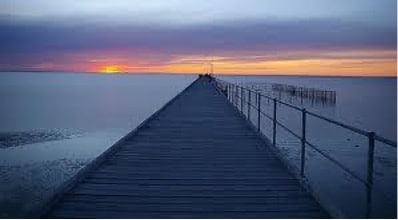
Smoky Bay Jetty stands as one of South Australia’s memorable coastal structures. It started life as working infrastructure, and it now serves residents and visitors as a valued public destination. This update summarises the jetty’s history and the decking repairs that helped secure its future.
Early settlement and the case for a jetty
Farmers settled the Smoky Bay district in the 1890s. However, authorities did not officially survey the town until 1913. In the early years, locals moved grain to the shore in bags. They then waded out at low tide with horse and cart to reach boats waiting offshore. Likewise, a supply boat arrived about once a month, and people used the same method to unload goods.
On 6 July 1908, local residents sent a petition to the Flinders House of Assembly to request a jetty. They argued the district was “growing and thriving” and needed better facilities to market produce. In addition, they estimated the land could produce up to 20,000 bags of wheat. The petition, dated 4 July 1908, carried 22 names.
Funding and construction milestones
On 18 January 1910, authorities released £2,000 to fund estimates and survey work. After the tender process, they awarded the contract to Messrs Lewis & Reid on 15 November 1910. The contract price totalled £7,297 15s 1d, and the programme allowed 60 weeks to complete the works.
The same contractor also agreed to paint the outside of the new goods shed for an estimated £20.
Builders completed the jetty on 13 April 1912. Officials then opened it on 1 May 1912. At completion, the jetty measured about 381 metres in length, with a 64-metre head. It also provided a reported depth of 3.3 metres at low tide.
Commercial use and later change
For decades, the jetty supported grain export by sea. However, in the 1950s, bulk handling and improved transport changed the economics. As a result, operators moved grain by road to the Thevenard silos instead.
In 1969, crews removed 88 metres of decking from the outer end. Consequently, people could no longer walk the entire original length. Even so, the Smoky Bay Progress Association, with strong local backing, helped stop further dismantling that year.
Decking repairs and restoration
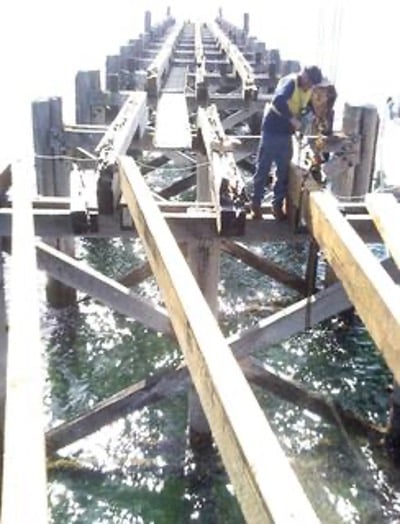
In 2006, the District Council of Ceduna worked with the Smoky Bay Progress Association to restore three bays of the jetty. In parallel, the “Friends of the Jetty” committee formed within the Progress Association and pushed for continued repair works.
The project aimed to improve the jetty as a leisure venue for locals and visitors. Therefore, the group promoted further decking repairs and the addition of practical amenities. In particular, proposals discussed lighting, seating, and shade structures to support safer and longer use.
Why this asset matters
Many communities struggle to replace marine structures because costs escalate quickly. In fact, local estimates suggested a like-for-like rebuild could exceed $5 million in today’s terms. For that reason, targeted repairs often deliver strong value.
Moreover, Smoky Bay Jetty supports several uses:
-
Fishing access for residents and tourists
-
Walking and sightseeing along the coastline
-
Picnics and informal gatherings in deeper water zones
-
A stronger visitor experience that can support local trade
With sound decking, better accessibility, and comfortable shelter, the jetty can serve more people for longer periods. Ultimately, that outcome protects both a heritage structure and a community hub.
References
-
Neville Collins (2005), The Jetties of South Australia
-
South Australian Archives