

7 Decking Mistakes That Ruin Great Gardens (And How to Avoid Them)
A homeowner’s checklist for a safer, stronger deck that looks right from day one
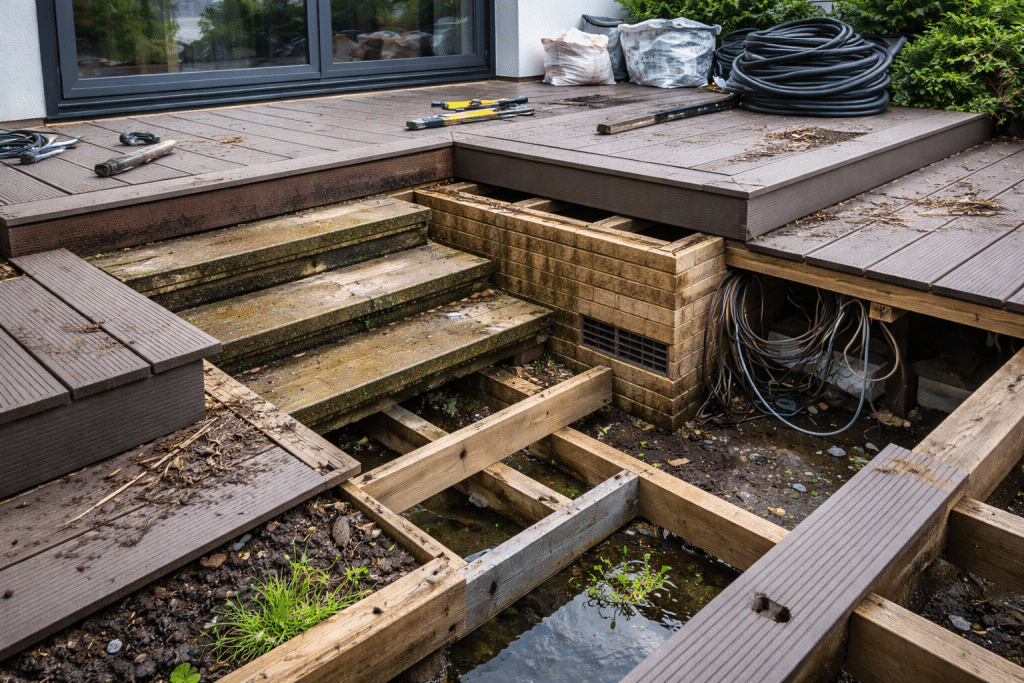
A good deck should make your garden easier to use. It mustn’t include any of these 7 decking mistakes. It should feel solid underfoot, look crisp at the edges, and drain well after rain. However, I still see plenty of projects that look fine on day one and start to annoy the homeowner by month three. In most cases, the boards do not cause the problem. The hidden planning does. Levels, ventilation, drainage, structure and detailing decide whether a deck feels “proper” or just “done.”
If you are planning decking for 2026, you have a real advantage. You can take a calm approach, book a site visit early, and solve problems on paper before anyone cuts timber or orders boards. If you want seasonal guidance to get started, these January decking tips will help
This article covers seven mistakes I see repeatedly, written for homeowners and DIYers. Use it as a checklist when you speak to a local DeckPro. If you also want help comparing quotes, this guide is worth reading before you commit
Mistake 1: Guessing levels and thresholds
Many decks fail at the transition between house and garden. People often guess the finished height, then discover the doors, steps and thresholds do not work together. You can end up with awkward step heights, a trip hazard at the door, or a deck that sits too high against brickwork. Worse still, a poor level can block air bricks or compromise drainage runs, and those issues tend to cost serious money to correct.
Instead, insist on clear level decisions at the start. Ask your DeckPro to confirm the finished floor level, the threshold detail, and how the deck meets the house without trapping moisture. Also ask where steps will land and how they will feel underfoot. A good installer explains this in plain English, because level planning sits at the heart of every successful deck.
7 Decking Mistakes That Ruin Great Gardens (And How to Avoid Them)
Mistake 2: Forgetting airflow and ventilation
A deck needs airflow beneath it, regardless of whether you choose timber or composite. When the sub-deck area stays damp, moisture lingers and algae arrives quickly, especially in shade. The surface can turn slippery, and the deck can stain in patches that never fully dry. You also put the subframe and fixings under stress when you keep them wet for long periods.
So, ask how the design creates clearance and ventilation. Ask what happens in the low areas where the deck sits close to ground level. Also ask how the installer avoids “dead zones” where air cannot move. Your goal is simple. You want a deck that dries quickly after rain, because that one decision improves safety, appearance and longevity.
Mistake 3: Building a weak subframe or using the wrong fixings
Homeowners notice bounce and squeaks immediately. Those symptoms almost always come from the frame, not the neccessarily deck boards. When an installer under-specifies joists, skips bracing, or uses fixings that cannot cope with movement (o the outdoors), the deck starts to feel cheap even if the surface boards look premium. A strong structure also controls vibration, which makes the deck feel quiet and confident when you walk across it.
Ask what the frame is made from and how the installer supports it, you want posts that last and not rot. Ask how they brace the frame and control lateral movement. Then ask what fixings they use and why they chose them. If the answers sound vague, and they can’t substantiate a written warranty, take that as a warning sign. The structure carries the long-term value, so you should treat it as the priority, not an afterthought.
Mistake 4: Ignoring drainage thinking
Water always wins, so you should plan for it rather than fight it later. If water pools beneath a deck, you will often see predictable staining lines, slippery algae zones, and wet patches that never dry. Shaded gardens show these problems fastest, because sunlight cannot rescue poor drainage.
Drainage also involves more than rainfall. Planters can overflow, irrigation can run off, and nearby paving can dump water towards the deck. Ask where water will land, where it will go, and how the ground beneath the deck will behave in winter. When you solve drainage early, you keep the deck cleaner, safer and easier to maintain.
Mistake 5: Leaving lighting until the end
Lighting changes how you use a deck, because it adds safety on steps and creates atmosphere in seating areas. Yet many projects treat lighting as a final extra, and that decision usually forces messy retrofits. Cables end up in awkward routes, transformer locations become compromised, and fittings look “added on” rather than designed in.
Plan lighting on day one, even if you install it later. Ask about cable routes, step light positions, and where transformers will sit. Also ask how the installer will keep everything accessible for future maintenance. When you treat lighting as part of the design, it looks intentional, and the deck feels more stylish at night.
Mistake 6: Accepting cheap fascia and weak edge detailing
Edges are the first thing most people notice, especially on steps, corners and long fascia runs. If the installer rushes the finishing details, the deck can look cheap even when you choose a Tier 1 board. A premium finish comes from alignment, consistent lines, tidy corners and a proper finishing system that suits the product.
If you want a useful style reference for 2026, this Trex UK overview may help
When you speak to an installer, ask how they will finish the fascia and form corners. Ask how they will detail steps and landings, and ask what you will see at eye level when you stand in the garden. Detailing is not “picky.” It is the difference between “nice” and “proper.” These highlighted 7 decking mistakes will certainly cost you a fortune if not noticed early.
Mistake 7: Having no maintenance plan
Low maintenance never means zero maintenance. Every deck needs basic care, even if you buy the best boards on the market. You will still need seasonal cleaning, you will still need to keep joints and drainage routes clear, and you will still need to manage shaded areas where algae forms quickly.
Ask what cleaning looks like for your exact deck, not a generic answer. Ask what products suit your boards and what you should avoid. Also ask how planters should sit, because trapped moisture underneath pots can stain surfaces and slow drying. A good installer will give you homeowner-friendly guidance that feels specific and usable.
What a good DeckPro should check on day one
A proper site visit involves far more than measuring up. It should cover levels and thresholds, step comfort and safety, ventilation and clearance, and drainage strategy. It should also cover subframe design and bracing, edge detailing, and lighting routes. If your installer does not raise those topics, raise them yourself, because you are paying for expertise and you deserve clarity early. Your DeckPro certainly shouldn’t be making these 7 decking mistakes…
Two smart actions before you commit
First, consider a structured “Deck Health Check” style consultation. It focuses on the hidden issues that cause expensive mistakes, and it helps you make decisions with confidence before you choose boards.
Second, ask for a written specification which includes the full scope and a detailed drawing, because vague quotes create disputes. A clear scope helps you compare like with like, and it protects both sides. This guide will help you tighten up the quotation process.
Final thought about your new decking
If you are planning a deck this year, book a site visit early and ask the right questions. When you get levels, airflow, drainage, structure, lighting routes and edge detailing right, you reduce risk and lift the finish dramatically. Then you can choose your boards with confidence, because the deck will perform well for years, not just weeks.
7 Decking Mistakes That Ruin Great Gardens (And How to Avoid Them) is a helpful guide for the home owner who is considering a new deck.